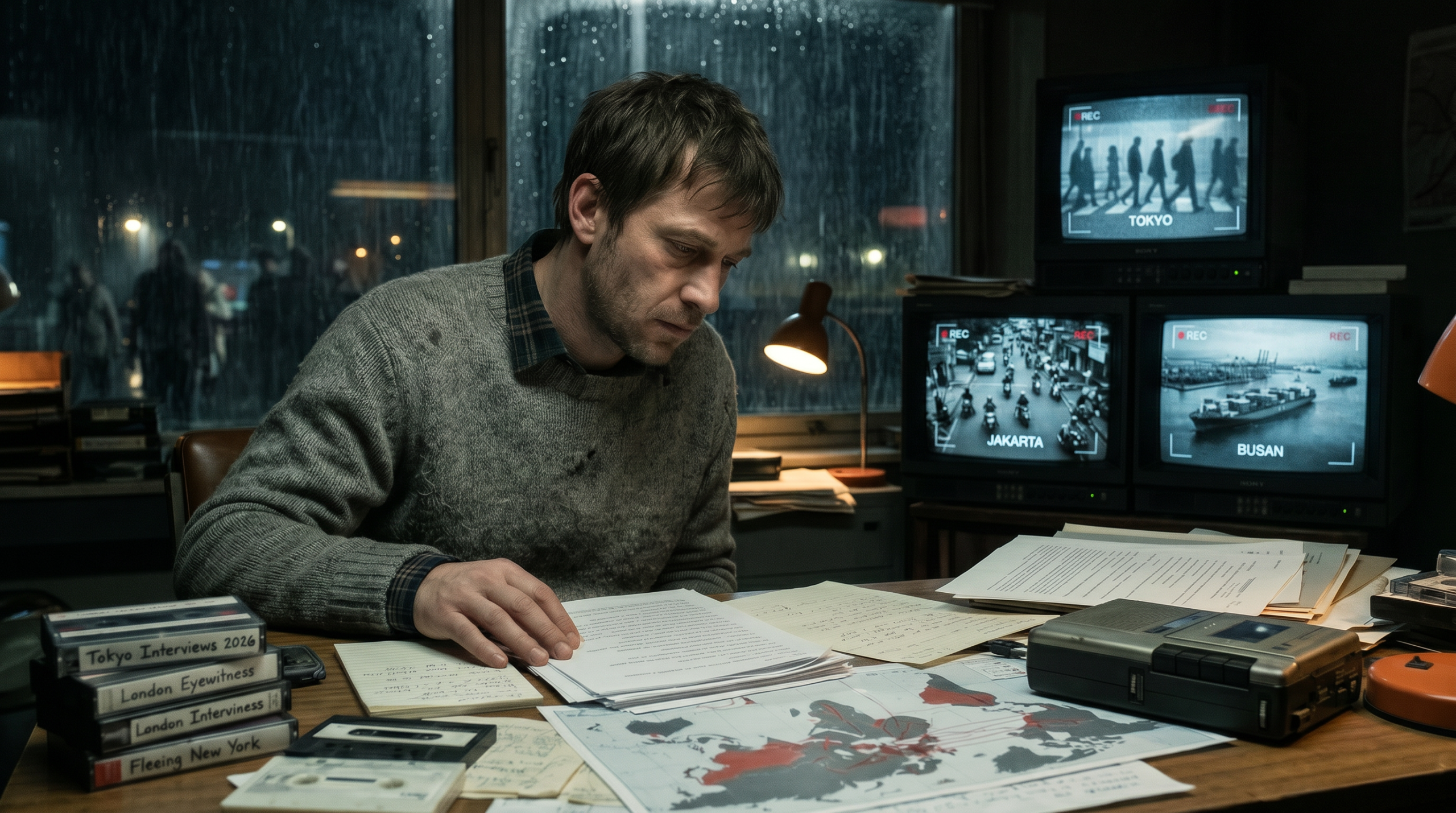
World War Z: An Oral History of the Zombie War, by Max Brooks, was published 20 years ago in 2006. The book is a collection of field reports, interviews and testimonies after a global zombie apocalypse.
In a surprising parallel with the COVID-19 pandemic, the initial outbreak occurs in rural China, near the Three Gorges Dam. Despite efforts from the Chinese government to quarantine the zone and cover up the outbreak, the zombie virus soon spreads globally.
WWZ presents personal or documentary accounts from China, Japan, Australia, Canada, the USA, Russia, North Korea, Israel and many other countries. Ostensibly written as an unofficial account of the outbreak, the novel presents itself as a form of anthropological or ethnographic research.
Ethnography is a type of qualitative research that gathers observations, interviews, and documentary or field note evidence. It is often characterised by the researcher employing a form of “participant observation”, where they immerse themselves in a specific community or cultural group, allowing them to understand their everyday behaviours, beliefs, and interactions from an “insider” perspective.
Ethnography, like any writing, is an exercise in shaping complex, diverse voices into a coherent narrative. This a challenge familiar to any writer or editor.
WWZ is ethnographic in the sense that it presents an eclectic pastiche of the zombie apocalypse through the first-hand accounts of those who lived through it, offering local, contextualised insights.
While the text is entirely fictional, it convincingly mimics the conventions of oral history, lending it a sense of immediacy and gravitas.
Twenty years on, what have we learnt about zombies? Zombie narratives still tend to reduce them to two dominant categories: fast and slow. Fast zombies sprint and attack aggressively, posing a high threat even as individuals, whereas slow zombies shuffle and shamble along, gradually overwhelming through sheer weight of numbers.
But occasionally, dispatches from the field, specifically from Asia, can reveal significant variance in zombie behaviour, albeit within the two broad categories outlined above.
For instance, South Korea’s Train to Busan (2016) and Colony (2026) – both directed by Yeon Sang-ho – depict fast zombies, but they also swarm as a crowd, echoing the hive mind of slow zombies.
Indonesia’s The Elixir (2025, directed by Kimo Stamboel), also features fast zombies with an unusual behavioural variance. When it rains, the zombies change from being ultra-aggressive to calm and distracted, gazing skyward and soaking up the rain as though entranced.
Is it time for an addendum to World War Z, one that prominently features narratives from Indonesia, Korea, and beyond, told in their own voices?
Whether in fiction or in practice, collecting voices is just the starting point. Ensuring they are clear, compelling, and publication-ready, is where the real work starts.
– Marshall, Brisbane, April 2026