
Introduction
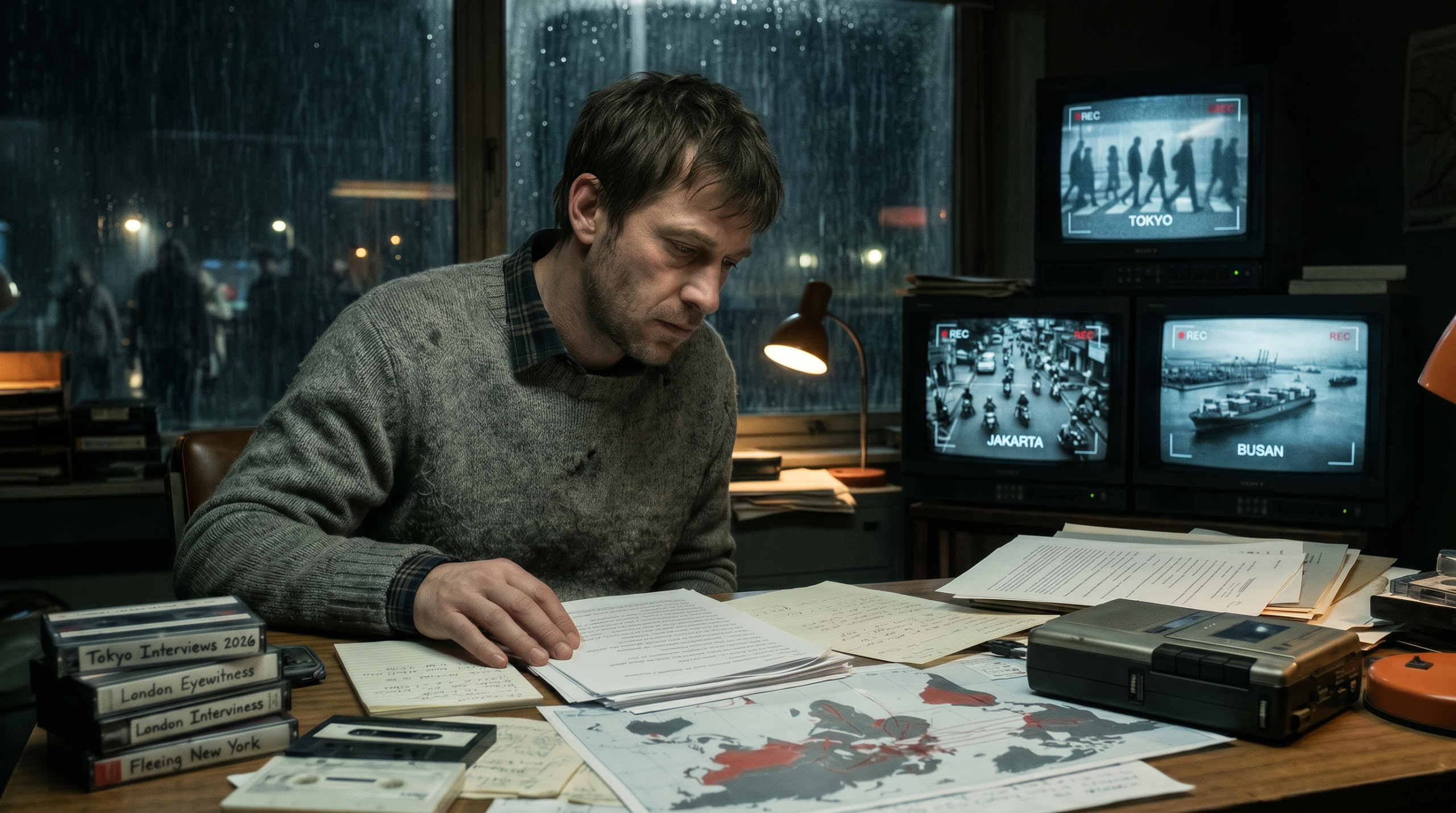
World War Z: An Oral History of the Zombie War, by Max Brooks, was published in 2006, 20 years ago. The book is a collection of field reports, interviews and testimonies following a global zombie apocalypse.
In a surprising parallel to the COVID-19 pandemic, the initial outbreak occurs in rural China near the Three Gorges Dam. Despite the Chinese government’s efforts to quarantine the area and cover up the outbreak, the zombie virus soon spreads globally.
Why World War Z feels ethnographic
WWZ presents personal or documentary accounts from China, Japan, Australia, Canada, the USA, Russia, North Korea, Israel and many other countries. Ostensibly written as an unofficial account of the outbreak, the novel positions itself as a form of anthropological or ethnographic research.
Ethnography is a form of qualitative research based on observation, interviews, field notes and documents. It often involves “participant observation”, in which researchers immerse themselves in a community or setting to understand everyday behaviours, beliefs and interactions from the inside.
Ethnography, like any writing, is an exercise in shaping complex, diverse voices into a coherent narrative. This is where WWZ becomes more than zombie fiction. It is a novel about the difficulty of turning scattered testimony into a coherent account.
WWZ is ethnographic in that it presents an eclectic pastiche of the zombie apocalypse through first-hand accounts of those who lived through it, offering local, contextualised insights.
Although the text is entirely fictional, it convincingly mimics the conventions of oral history, lending it a sense of immediacy and gravitas.
Fast, slow and something stranger
Twenty years on, what have we learnt about the undead? Zombie narratives still tend to reduce them to two dominant categories: fast and slow. Fast zombies sprint and attack aggressively, posing a high threat even as individuals. Slow zombies, however, shuffle and shamble, gradually overwhelming through sheer numbers, often behaving with a kind of ‘hive mind’.
But occasionally, dispatches from the field, especially from Asia, reveal significant variations in zombie behaviour, even within these two broad categories.
What Asian zombie films add
South Korea’s Train to Busan (2016) and the soon-to-be-released Colony (2026), both directed by Yeon Sang-ho, depict fast zombies that also swarm as a crowd, echoing the hive mind of slow zombies. Meanwhile, Korea’s Rampant (2018) and Kingdom (2019), directed by Kim Sung-hoon, introduce a striking twist: the undead are nocturnal.
Indonesia’s The Elixir (2025, directed by Kimo Stamboel) also features fast zombies with an unusual behavioural trait. When it rains, the undead shift from being ultra-aggressive to calm and distracted, gazing skyward and soaking up the rain as though entranced.
Is it time for an addendum to World War Z, one that prominently features narratives from Indonesia, Korea, and beyond, told in their own voices?
Such an addendum would not merely add more chapters to Brooks’ already excellent book. Instead, Asian perspectives could reveal dimensions of the zombie genre that dominant representations may have obscured, including its deeper social and political undercurrents.
– Marshall, Brisbane, April 2026